Our Manufacturing Services

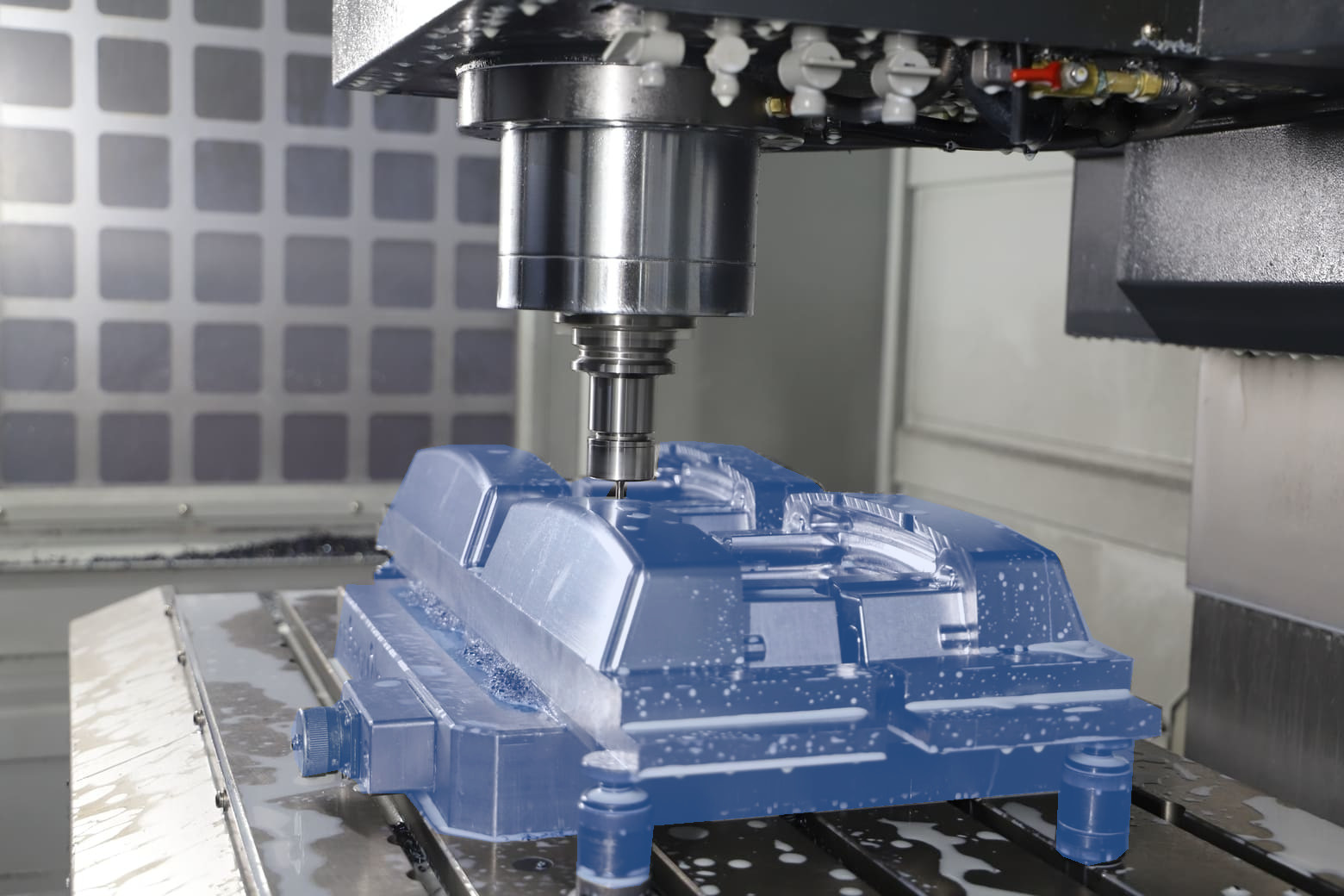
Due to our high degree of specialization in CNC machining and all necessary post-processing, we can realize excellent quality, outstanding conditions and first-class logistics for your machined parts.

  • Tolerances down to ± 0.004 in (± 0.01 mm) achievable – less on request.
  • From 3-Axis Mills to 5-Axis Complex Parts.
  • Lead times from 5 Business Days.
CNC Turning
  • Tolerances down to ± 0.004 in (± 0.01 mm) achievable – less on request.
  • Over 1.000 CNC Turning Centers available for your projects.
  • Multi-axis mill turns and combined machining capacities.
Post-Processing
  • We generate Instant Quotes for 20+ surface finishes.
  • Various Heat Treatments and Surface Finishes available.
  • Can be directly assigned and instantly quoted on your CNC-parts.

A Prequalified CNC-Manufacturing Network
to get your Parts Machined

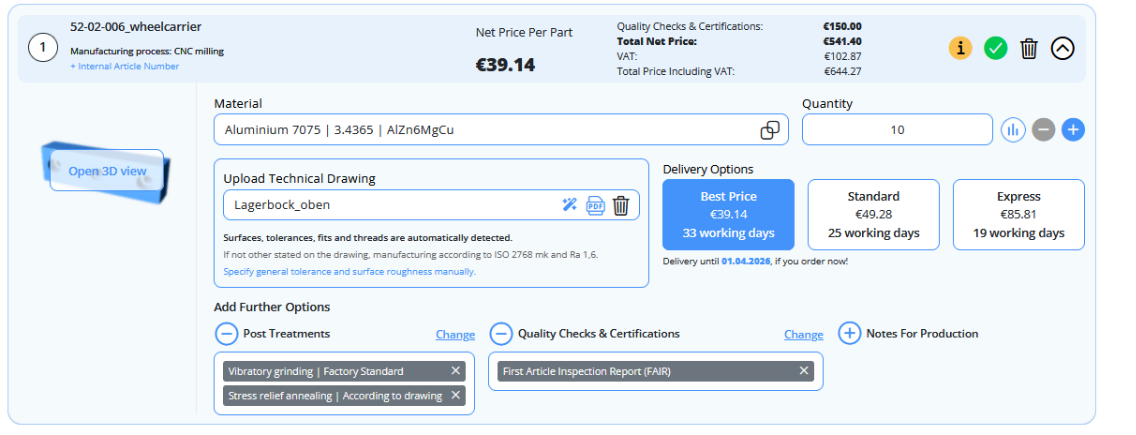
You can conveniently place your order via our online calculation for turned or milled parts. We will take care of quality, production monitoring and logistics right to your desk.
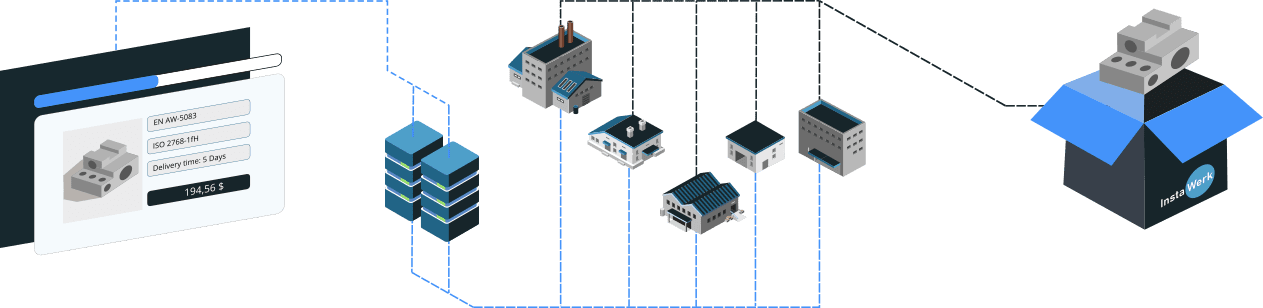
Instant
Quoting

Upload your parts to our online calculator and get an instant quote for your CNC machined parts. Your Data is saved and processed on ISO 27001 certified servers.

Precision
Manufacturing

Our intelligent matching algorithm assigns your parts to the highest quality available CNC-manufacturer. Your data is never visible to other manufacturers.

Express
Shippment

We take care of quality control, shipping and customs for you. You simply get perfect CNC components – without any annoying administrative processes.

Scalable CNC-Manufacturing with Quality in Mind

You cannot optimize the manufacturing triangle of time, cost and quality within one manufacturing facility. Therefore, we leverage our network of over 1,000 suppliers to realize the highest availability, attractive conditions and high-precision CNC components for you.

Reliable Manufacturing Capacities

By permanently tracking the reliability and quality of our suppliers, we ensure a highly resilient, reliable and high-quality network of CNC manufacturers.

From Prototypes to Serial Manufacturing

Whether it’s one piece or several thousand, at InstaWerk we ensure a high level of scalability so that you can securely and cost-effectively source your CNC-machined parts from development to market launch.

Quality, Quality, Quality

We are not just about accessibility and competitive offers. We are concerned with outstanding quality that is accessible and affordable. To achieve this, we develop in-depth quality standards and processes.

Unbeaten Conditions

By bundling orders into large order volumes, using network effects and streamlining all processes through digitalization, we offer unbeatable conditions for your CNC components.

Instant Pricing Feedback

Why wait weeks for quotes? At InstaWerk, you can get your instant quote for CNC manufacturing in seconds. Our pricing is based on AI, empirical data from previous projects and considers the current market environment.

Choose the ideal setup.

You will always find the right setting for your project via the flexible choice of materials, delivery times and quality requirements.

Add what you need.

Add post treatments, quality certificates or express delivery and only pay for what you actually need.

f.a.q.

CNC manufacturing can raise complex issues. Or be quite simple.

CNC machined parts are all about precision. Therefore, we have aligned all our processes to the highest quality standards. Our goal is to make German-level quality available at attractive conditions.

Wat onderscheidt InstaWerk van andere CNC-fabrikanten?

At InstaWerk, the customer comes first: That’s why we design our processes with a clear customer focus. Ordering turned and milled parts from InstaWerk is simple, cost-effective and fast. Through our digital processes and a high degree of automation, we streamline ordering processes and can pass on the cost advantage directly to our customers. An important building block for this is our online calculation, which you can use to calculate and order your turned parts and milled parts 24 hours a day.

The quality of the components is key. That’s why we run a closed manufacturing network to keep your data safe and ensure high quality production. Due to our unique order bundling, we can allocate higher order volumes to our CNC manufacturers and realize competetive pricing. In this way, we are able to reconcile low costs for our customers with the highest quality components.

Hoe handhaaft InstaWerk de hoogste kwaliteitsnormen met een gedistribueerd netwerk van fabrikanten?

First, all manufacturing partners go through an accreditation process in which we evaluate the manufacturing capabilities, quality processes and technical capabilities. Only CNC manufacturers that meet our high quality standards are accepted into the manufacturing network.

We also operate a closed manufacturing network. This means that manufacturers cannot freely join the network and cannot view projects.

Using our data analysis capabilities and the experience gained from thousands of manufacturing projects, we can motivate excellent finishers with more orders and exclude below-average finishers from the network using key performance indicators. SO successively increases our platform quality.

In order to further develop our manufacturing partners, we promote a culture of open communication, regular quality audits and processes for continuous quality improvement.

Produceert u alleen prototypes of is er ook een oplossing voor serieproductie?

We provide prototypes as well as series parts. Online calculation is particularly suitable for prototypes and smaller quantities. Here you can use your CAD model to calculate various configurations of your turned and milled parts and order them directly online.

For series parts with larger quantities or milled parts with special alloys, on the other hand, the inquiry via contact form is the best option. We will review your data and will be happy to provide you with an offer. Our engineering team also takes care of all in-depth questions for series inquiries.

Wat zijn de voordelen van on-demand productie voor bedrijven?

In times of increasing uncertainty and supply shortages, instead of buying your own machines, maintaining them and hiring staff for manufacturing, so-called on-demand services offer the advantage of a more flexible, cost-effective and resilient solution. In addition, many companies recognize the value in simple, digitized processes and the ability to focus on your core business rather than chasing day-to-day manufacturing issues.

For start-ups, research institutes and other innovation drivers, the value of InstaWerk lies primarily in being able to order fast, cost-effective and highest-quality turned and milled parts conveniently and easily. This allows small teams to successfully develop innovations and bring them to market quickly.

Corporates love InstaWerk too: In addition to the unbeatable conditions, we offer digital processes, fast and uncomplicated procurement solutions, and outstanding quality. Thus, InstaWerk is becoming a preferred solution in strategic procurement for more and more larger companies.

Hoe worden mijn onderdelen geproduceerd en naar mij verzonden?

Your data will be reviewed and approved by our team after the order. Afterwards you will receive an order confirmation with payment information from us. Then our algorithm assigns the production order to a production bundle and this is allocated to a suitable CNC-manufacturer. Your data remains protected from unauthorized access and only those who really need to see your data have access to it.

CNC Machining as a Scalable System 

Instant Quotes, Unlimited Capacity, Verified Quality

InstaWerk is a complete CNC machining solution – not just a place to order parts, but a system that connects instant quoting, DFM clarity, and reliable production execution.  It brings engineers, procurement, and manufacturing onto one streamlined workflow with transparent pricing, lead times, and quality assurance built in. From prototype to series, you get scalable capacity, controlled supplier performance, and consistent inspection standards in one platform.

Unlimited Capacity
Unlimited CNC-Machining Capacitites

InstaWerk delivers access to over 2.500 Machines for CNC-milled parts and CNC-turned parts, giving engineers and procurement specialists all the ressources they need instantly. With over 60 materials and 40 post treatments and a high variety of processes there are endless possibilities for most advanced designs.

Ordered in Seconds
Instant Quotes for CNc Machining, Milling and Turning

InstaWerk’s instant quoting gives engineers and procurement specialists immediate, reliable price and lead-time visibility for CNC machined parts, eliminating back-and-forth and accelerating design-to-order decisions. It standardizes procurement, reducing sourcing risk while keeping projects moving with faster approvals and cleaner workflows.

Express Shippment

Ensured Quality for your CNC milled parts

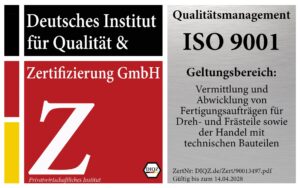
InstaWerk is ISO 9001 certified and runs an inhouse Quality Control Hub with high-end ZEISS CMMs – every order is verified internally before shipment. All production runs through pre-audited suppliers that are continuously monitored, ensuring consistent, traceable quality from first article to series parts.

Available Materials and Post Treatments for Online Quotes

InstaWerk offers a broad portfolio of engineering materials that enables even the most demanding designs – from lightweight structures and corrosion-critical components to wear-focused parts and high-performance assemblies. This range helps you align your CNC machined parts with real-world requirements like strength, weight, chemical exposure, temperature, and long-term durability. The materials listed in this section reflect our current standard offering for CNC milled parts and CNC turned parts. If you need a material that is not shown here, InstaWerk can usually source it via individual request, so you can still match your design to the exact application needs.

Available Materials for CNC Machining

Aluminium At InstaWerk, aluminium is a go-to choice for CNC milled parts and CNC turned parts when low weight, corrosion resistance, and strong value for money matter. Typical applications include housings, brackets, structural parts, and functional components across machinery, automotive, and electronics. Commonly used alloys include EN AW-6061 and EN AW-6082 – both reliable options for lightweight CNC machined parts with solid mechanical performance.

AlMg1SiCu – EN AW-6061 – 3.3211

AlMg1SiCu (EN AW-6061, 3.3211) is a widely used aluminium for CNC machining of brackets, housings, frames and lightweight structural components, especially where both CNC milled parts and CNC turned parts need good dimensional stability. Advantages include very good machinability, a strong strength-to-weight ratio, corrosion resistance and consistently clean surface finishes in CNC Milling and CNC Turning. Disadvantages are lower hardness and wear resistance than steels, limited suitability for high-temperature load cases, and a tendency for thin sections to vibrate if the setup is not rigid.

AlZn5,5MgCu – EN AW-7075 (Ergal) – 3.4365

AlZn5,5MgCu (EN AW-7075, Ergal, 3.4365) is used for high-performance CNC machined parts such as load-critical brackets, precision mounts, structural connectors and high-strength shafts, often as CNC milled parts with occasional CNC turned parts where maximum strength-to-weight matters. Advantages are very high strength and stiffness for aluminium plus strong fatigue performance, enabling lightweight designs that would otherwise require steel. Disadvantages include weaker corrosion resistance than 6xxx/5xxx alloys, limited weldability, and higher material cost; protective finishing is often needed depending on environment.

AlMgSi1 – EN AW-6082 (Anticorodal) – 3.2315

AlMgSi1 (EN AW-6082, Anticorodal, 3.2315) is a standard choice for structural CNC machined parts like brackets, frames, plates, mounts and machined blocks, especially when you need stiff CNC milled parts and solid CNC turned parts in one build. Advantages include higher strength than many 6xxx alloys, good corrosion resistance, and generally reliable machinability for CNC Milling and CNC Turning with stable tolerances. Disadvantages are less consistent decorative surface quality compared to 6060/6063 (not ideal for premium anodized cosmetics) and a higher risk of distortion on thin or highly relieved geometries if residual stresses are present.

AlMg0,7Si – EN AW-6063 – 3.3206

AlMg0,7Si (EN AW-6063, 3.3206) is often chosen for CNC machining of lightweight profiles, covers, trim parts and functional housings where good surface quality matters for CNC milled parts and simple CNC turned parts. Advantages include excellent corrosion resistance, very good anodizing response for decorative finishes, and stable behavior in CNC Milling when cutting loads are moderate. Disadvantages are lower strength than EN AW-6061 and a higher sensitivity to deformation on thin walls, so it is less ideal for highly loaded CNC machined parts.

AlMg2,5 – EN AW-5052 – 3.3523

AlMg2,5 (EN AW-5052, 3.3523) is commonly used for corrosion-resistant CNC machined parts such as covers, plates, marine and chemical-environment components, and lightweight fixtures, typically produced as CNC milled parts from plate and as simpler CNC turned parts from bar. Key advantages are excellent corrosion resistance (especially in saltwater), good fatigue performance for its class, and reliable results in CNC machining when surface finish is prioritized over maximum strength. Disadvantages are lower strength and hardness than 6xxx alloys, plus a more “gummy” cutting behavior that can increase burrs and built-up edge, making very sharp edges and tight cosmetic requirements more demanding.

AlCuMgPb – EN AW-2007 – 3.1645

AlCuMgPb (EN AW-2007, 3.1645) is a classic choice for high-precision CNC machining of fasteners, fittings, shafts and connector-style components, especially when producing large volumes of CNC turned parts with tight tolerances. Its main advantages are outstanding machinability, excellent chip breaking and high strength, which enables fast cycle times and very consistent CNC machined parts in CNC Turning. Downsides are comparatively weak corrosion resistance and limited suitability for welding or decorative anodizing, plus the lead content can trigger compliance restrictions depending on industry and destination market.

AlCuMg1 – EN AW-2017A – 3.1325

AlCuMg1 (EN AW-2017A, 3.1325) is frequently used for load-bearing CNC machined parts like brackets, structural connectors, plates and precision components where higher strength than 6xxx aluminium is needed in CNC milling and occasional CNC turned parts. Advantages include high strength, good fatigue performance and reliable dimensional stability, making it suitable for mechanically stressed CNC milled parts. Disadvantages are reduced corrosion resistance compared to 5xxx and 6xxx alloys, and anodizing quality is typically less uniform, so it is not ideal for decorative surfaces without additional protection.

AlCu4Mg1 – EN AW-2024 – 3.1355

AlCu4Mg1 (EN AW-2024, 3.1355) is a high-strength aerospace-grade aluminium used for heavily loaded CNC machined parts such as structural brackets, rib-like components, precision plates and performance-critical fittings, typically produced as CNC milled parts and occasionally as CNC turned parts. Advantages are excellent strength-to-weight ratio and strong fatigue behavior, enabling lightweight designs without moving to steel. Disadvantages include poor corrosion resistance compared to 6xxx/5xxx alloys, limited weldability and less consistent decorative finishing, so protective coatings are often required.

AlMg4,5Mn – EN AW-5083 (Peraluminium) – 3.3547

AlMg4,5Mn (EN AW-5083, 3.3547) is typically used for robust, corrosion-resistant CNC machined parts such as marine and offshore components, plates, brackets, base parts and pressure-related hardware, most often produced as CNC milled parts from thick plate and occasionally as CNC turned parts from bar. Advantages include excellent seawater corrosion resistance, high strength for a 5xxx alloy, and very good toughness, making it a strong choice for demanding environments in CNC machining. Disadvantages are a relatively ductile cutting behavior that can promote burr formation and built-up edge, plus it is not ideal for decorative anodizing compared to 6xxx alloys.

AlMg3 – EN AW-5754 – 3.3535

AlMg3 (EN AW-5754, 3.3535) is widely used for corrosion-resistant CNC machined parts such as plates, covers, brackets, panels and enclosures, especially in automotive, marine and general equipment where CNC milled parts dominate and simpler CNC turned parts are possible from bar. Advantages include excellent corrosion resistance, good toughness and weldability, plus reliable performance for medium-load applications. Disadvantages are lower strength than many 6xxx/2xxx alloys and a more ductile “gummy” cutting behavior that can increase burrs and make crisp edges harder to achieve.

AlMgSi0.5 – EN AW-6060 – 3.3206

AlMgSi0.5 (EN AW-6060, 3.3206) is commonly used for CNC machined parts like lightweight housings, brackets, covers and profile-based components where good surface finish is important for CNC milled parts and straightforward CNC turned parts. Advantages include good corrosion resistance, stable machining behavior, and an excellent response to anodizing, which makes it attractive for visible CNC machined parts. Disadvantages are lower strength than EN AW-6061 and reduced suitability for highly loaded interfaces, plus thin walls can deform if clamping is aggressive.

Steel Steel is often the first choice at InstaWerk for CNC milled parts and CNC turned parts that must be strong, robust, and cost-effective – for example shafts, pins, fixtures, base components, and highly loaded machine elements. This category spans a wide range, from free-machining grades to heat-treatable engineering steels. Commonly used materials include 42CrMo4 (4140) and C45 (1.0503) – proven choices for durable CNC machined parts under mechanical load.

C45 – AISI 1045 – 1.0503

C45 (AISI 1045, 1.0503) is a widely used medium-carbon steel for CNC machining of shafts, pins, bolts, levers, bushings and general machine components, often produced as CNC turned parts with secondary CNC milled parts like flats, keyways or pockets. Advantages include good strength, good wear potential after heat treatment, and broad availability, making it a solid default for robust CNC machined parts. Disadvantages are lower machinability than free-machining steels, limited weldability, and low corrosion resistance, so protective finishing is often needed.

S235JR – St 37-2 – 1.0038

S235JR (St 37-2, 1.0038) is a general-purpose structural steel used for simple CNC machined parts such as base plates, brackets, frames, mounts and welded assemblies where CNC milled parts are primarily needed and CNC turned parts are straightforward. Advantages are low cost, wide availability, good formability and weldability, making it practical for functional components that do not require high strength. Disadvantages are comparatively low mechanical performance, variable machinability depending on batch and condition, and poor corrosion resistance, so coating is often required for durable CNC machined parts.

S355J2+N – ST 52-3 – 1.0570

S355J2+N (ST 52-3, 1.0570) is a common choice for CNC machining of structural CNC machined parts such as machine frames, brackets, mounts, base plates and welded fabrications where higher strength than S235 is needed, typically as CNC milled parts and also as CNC turned parts for pins and shafts. Advantages include good strength and toughness, reliable availability, and solid weldability, making it a practical engineering steel for heavy-duty components. Disadvantages are limited corrosion resistance, higher cutting forces than free-machining grades, and variable surface finish potential depending on supply condition, so coatings and realistic cosmetic expectations are important.

40CrMnNiMo8-6 – Tool Steel MCMS – 1.2312

40CrMnNiMo8-6 (Tool Steel MCMS, 1.2312) is typically used for CNC machining of plastic injection mold bases, frames, insert plates, holders and general tooling components where you want ready-to-machine, pre-hardened stock for CNC milled parts and CNC turned parts. The big advantages are that it’s supplied quenched and tempered, offers high toughness and dimensional stability, and the sulfur addition improves machinability and chip control, which helps shorten cycle times in CNC Milling and CNC Turning. Key drawbacks are only moderate corrosion resistance (not a stainless grade), generally poor weldability, and reduced polishability compared to low-sulfur mold steels, so it’s not ideal when mirror-grade surfaces are required.

42CrMo(S)4 – 4140 – 1.7227

42CrMo(S)4 (4140, 1.7227) is a versatile alloy steel for CNC machining of shafts, axles, bolts, clamps, machine components and highly loaded adapters, produced as both CNC turned parts and CNC milled parts when strength and toughness are required. Advantages include high mechanical strength, good fatigue resistance and broad availability in different heat-treatment conditions, which makes it a reliable default for demanding CNC machined parts. Disadvantages are higher weight than aluminium, the need for corrosion protection in many environments, and noticeably higher cutting forces and tool wear compared to free-machining steels.

11SMn30/9SMn28 – 1215/1213 – 1.0715

11SMn30/9SMn28 (1215/1213, 1.0715) is a classic free-machining steel for high-volume CNC turned parts like bushings, spacers, fittings, pins and small shafts, and it also works well for straightforward CNC milled parts where maximum productivity matters more than peak strength. Advantages are excellent machinability, very short chips, high cutting speeds and clean surfaces, which makes it ideal for cost-effective CNC machining with tight cycle times. Disadvantages are comparatively low strength and toughness, reduced weldability, and limited corrosion resistance, so it is not suited for heavily loaded or outdoor CNC machined parts without protection.

9SMnPb36 – 12L14 – 1.0737

9SMnPb36 (12L14, 1.0737) is a top choice for ultra-efficient CNC machining of high-volume CNC turned parts such as fittings, screws, bushings, spacers and precision pins, and it also performs well for simple CNC milled parts with many drilled or tapped features. Advantages are outstanding machinability, excellent chip breaking, very low cutting forces and consistently clean surfaces, which enables fast CNC Turning and CNC Milling with tight tolerances at low cost. Disadvantages include low strength and impact toughness, poor weldability, and limited corrosion resistance, plus the lead content can be problematic for compliance or industry restrictions depending on the application.

16MnCr5 – AISI 5115 – EC80 – 1.7131

16MnCr5 (AISI 5115, EC80, 1.7131) is commonly used for CNC machining of gears, sprockets, shafts, bushings and wear-critical machine elements that will be case hardened, with pre-machining done as CNC turned parts and CNC milled parts before heat treatment. Advantages are excellent suitability for carburizing, a tough core with a hard wear-resistant surface after hardening, and good fatigue performance for drivetrain-style CNC machined parts. Disadvantages are that properties depend strongly on heat treatment, distortion during carburizing and quenching can be significant, and corrosion resistance is low without coating.

Stainless steel Stainless steel is selected at InstaWerk for CNC milled parts and CNC turned parts when corrosion resistance, cleanability, and long-lasting surfaces are essential – especially in food equipment, medical devices, chemical processing, and marine applications. The right choice depends strongly on the service media and environment. Commonly used grades include AISI 304 (1.4301) and AISI 316L (1.4404) – two widely adopted standards for corrosion-resistant CNC machined parts.

X5CrNi18-10 – Edelstahl V2A – AISI 304 – 1.4301

X5CrNi18-10 (V2A, AISI 304, 1.4301) is widely used for corrosion-resistant CNC machined parts such as fittings, housings, brackets, medical and food-contact hardware, produced as CNC milled parts and CNC turned parts when cleanliness and durability matter. Advantages include very good general corrosion resistance, good formability, and a wide standards ecosystem that makes sourcing and specification straightforward. Disadvantages are comparatively difficult CNC machining due to strong work hardening, higher cutting forces, heat buildup and a tendency to produce long stringy chips, plus it is not ideal for chloride environments compared to 316.

X2CrNiMo17-12-2 – Edelstahl V4A – AISI 316 – 1.4401

X2CrNiMo17-12-2 (V4A, AISI 316, 1.4401) is a go-to stainless steel for corrosion-critical CNC machined parts such as valves, fittings, marine hardware, chemical-processing components and medical-grade housings, produced as both CNC milled parts and CNC turned parts. Advantages include excellent resistance to chlorides and many chemicals compared to 304, strong long-term durability, and good suitability for hygienic applications with high surface quality requirements. Disadvantages are challenging CNC machining due to work hardening, heat concentration and stringy chips, plus higher material and machining cost than 304 or carbon steels.

X8CrNiS18-9 – AISI 303 – 1.4305

X8CrNiS18-9 (AISI 303, 1.4305) is a free-machining stainless steel used for efficient CNC machining of fittings, screws, bushings, spacers and precision shafts, especially for high-volume CNC turned parts with secondary CNC milled parts like flats and drilled features. Advantages are excellent machinability for a stainless grade, good chip breaking and fast cycle times in CNC Turning and CNC Milling, while still providing useful corrosion resistance for indoor and mildly corrosive environments. Disadvantages are reduced corrosion resistance and lower toughness than 304 due to the sulfur addition, and weldability is generally poor, so it is not ideal for welded or chloride-exposed CNC machined parts.

X2CrNiMo17-12-2 – Edelstahl AISI 316L – 1.4404

X2CrNiMo17-12-2 (AISI 316L, 1.4404) is commonly used for corrosion-critical CNC machined parts such as medical and pharma components, food-processing hardware, marine fittings and chemical-industry parts, produced as CNC milled parts and CNC turned parts when long-term resistance and cleanability matter. Advantages include excellent chloride and chemical resistance plus improved weldability versus 316 due to the low-carbon grade, reducing sensitization risk in welded assemblies. Disadvantages are demanding CNC machining from work hardening, heat buildup and stringy chips, along with higher cost than 304 and longer cycle times for tight-tolerance CNC machined parts. For CNC Turning and CNC Milling, we use sharp, wear-resistant carbide tools, keep feed stable to avoid rubbing, apply high coolant flow and chip breaking strategies, and minimize dwell time to prevent work hardening that quickly impacts tool life and surface finish.

X6CrNiMoTi17-12-2 – Edelstahl AISI 316Ti – 1.4571

X6CrNiMoTi17-12-2 (AISI 316Ti, 1.4571) is used for CNC machined parts like exhaust and high-temperature process components, chemical-industry fittings, clamps and housings where 316-level corrosion resistance is needed with improved stability at elevated temperatures, produced as CNC milled parts and CNC turned parts. Advantages include strong resistance to chlorides and many chemicals plus better intergranular corrosion behavior after thermal exposure thanks to titanium stabilization, which is useful for welded or heat-affected assemblies. Disadvantages are higher material cost and challenging CNC machining due to work hardening, heat concentration and stringy chips, often leading to shorter tool life than free-machining stainless grades. For CNC Turning and CNC Milling, we use sharp coated carbide tooling, maintain consistent chip load to avoid rubbing, apply ample coolant and reliable chip breaking, and avoid dwell or re-cutting chips to keep surface quality and tolerances stable on CNC machined parts.

X20Cr13 – Edelstahl AISI 420 – 1.4021

X20Cr13 (AISI 420, 1.4021) is a martensitic stainless steel used for CNC machined parts like shafts, valve components, pump parts, wear faces and tooling-style components where higher hardness is needed, often as CNC turned parts with additional CNC milled parts for keyways, flats or pockets. Advantages include the ability to heat treat to high hardness and good wear resistance, with better corrosion resistance than carbon steels in mild environments. Disadvantages are lower corrosion resistance than 304/316, reduced toughness at higher hardness levels, and machining difficulty increases strongly after hardening.

Titanium Titanium is a strong option at InstaWerk for CNC milled parts and CNC turned parts when you need maximum strength at low weight or outstanding corrosion resistance – typical in aerospace, motorsport, medical, and chemical-industry applications. It is often chosen when aluminium is not strong enough and steel is too heavy or not corrosion-resistant enough. Common grades include Titanium Grade 2 (3.7035) and Grade 5 Ti-6Al-4V (3.7165) – both popular for high-performance CNC machined parts.

3.7035 – Grad 2 „Ti 2“

Titanium Grade 2 (3.7035, Ti 2) is widely used for corrosion-resistant CNC machined parts such as fittings, flanges, heat-exchanger components, chemical-process hardware and medical or marine components, produced as CNC milled parts and CNC turned parts when durability and low weight matter more than maximum strength. Advantages include excellent corrosion resistance, very good ductility and formability, and reliable performance in aggressive media, making it a strong choice for long-life CNC machining applications. Disadvantages are lower strength than titanium alloys like Ti-6Al-4V, higher material and machining cost, and a tendency to gall and transfer material to the tool, which can hurt surface finish.

3.7165 Grade 5 Ti6Al4V

Titanium Grade 5 Ti-6Al-4V (3.7165) is used for high-performance CNC machined parts such as aerospace brackets, lightweight structural components, medical implants, motorsport hardware and high-strength fasteners, produced as both CNC milled parts and CNC turned parts where strength-to-weight is critical. Advantages include very high strength, excellent fatigue performance and strong corrosion resistance, enabling compact designs with long service life. Disadvantages are higher material and machining cost, low thermal conductivity that drives heat into the tool, and a tendency for tool wear and surface damage if parameters are too aggressive.

Polymers Polymers are used at InstaWerk for CNC milled parts and CNC turned parts when low weight, electrical insulation, chemical resistance, or low-friction performance is required – often for functional and wear components. Depending on the use case, this ranges from cost-effective housings to high-end parts for aggressive media. Common materials include POM-C (Delrin) and PEEK – reliable choices for functional CNC machined parts with well-defined properties.

PTFE – Teflon

PTFE (Teflon) is widely used for chemically resistant seals, valve seats, insulating components, slide bearings and low-friction liners where CNC machined parts must remain stable in aggressive media. Key advantages are outstanding chemical resistance, extremely low friction and broad temperature capability, which makes PTFE ideal for demanding process and fluid-handling applications. Disadvantages are low stiffness and strength, creep under sustained load, and comparatively high thermal expansion, so precision fits and thin features can shift with temperature or load over time. When specifying PTFE CNC machined parts, consider whether you need filled PTFE (glass, carbon, bronze) for better wear and reduced creep, define allowable deformation, and ensure the design accounts for sealing compression, thermal movement and long-term dimensional stability.

POM-C – Delrin

POM-C (Delrin, acetal copolymer) is commonly used for low-friction, dimensionally stable CNC machined parts like bushings, gears, sliders, spacers, valve components and precise mechanical housings. Advantages include high stiffness for a polymer, good wear behavior, low moisture absorption and reliable tolerances, making it a strong choice for functional CNC milled parts and CNC turned parts in automation and machinery. Disadvantages are limited high-temperature performance, sensitivity to strong acids and oxidizers, and lower impact toughness than some engineering plastics, depending on design. When selecting POM-C CNC machined parts, consider contact pressure and wear pairing, whether food-contact or low-noise requirements apply, and if humidity, chemicals or elevated temperatures suggest alternatives like PA, PEEK or filled grades.

PEEK

PEEK is used for high-end CNC machined parts in aerospace, medical, electronics and chemical equipment, especially for lightweight components that must handle heat, chemicals and continuous mechanical load. Key advantages are excellent strength and stiffness for a polymer, high temperature capability, outstanding chemical resistance and very good long-term dimensional stability, making PEEK suitable for demanding CNC machined parts where metals are too heavy or reactive. Disadvantages are high material cost and, depending on the application, lower thermal conductivity and surface hardness than metals, which can limit extreme wear or heat dissipation requirements. When specifying PEEK CNC machined parts, clarify whether unfilled or reinforced grades (glass or carbon fiber) are needed for stiffness and creep resistance, and account for mating surfaces, tolerances across temperature, and regulatory needs (for example medical or aerospace documentation).

PA 6 Nylon

PA6 (Nylon) is widely used for tough, lightweight CNC machined parts such as bushings, sliders, rollers, wear pads, covers and general mechanical components where impact resistance and abrasion performance matter. Advantages include good toughness, low friction, good wear behavior and an attractive cost-performance ratio for functional CNC machined parts in machinery and automation. Disadvantages are moisture absorption and resulting dimensional change, plus reduced stiffness and strength at elevated temperatures compared with higher-end polymers like PEEK. When specifying PA6 CNC machined parts, consider whether the application tolerates moisture-driven size changes, whether a stabilized or filled grade is needed for stiffness and wear, and if exposure to water, heat or tight fits suggests PA12, POM-C or PEEK instead.

PA 66-GF30

PA66-GF30 (Nylon 66 with 30% glass fiber) is used for stiff, load-bearing CNC machined parts such as structural brackets, mounts, housings, support elements and mechanically stressed components in automation and equipment. Advantages include significantly higher stiffness and strength than unfilled nylon, improved creep resistance and good temperature capability for a polymer, making it suitable for durable CNC machined parts under sustained load. Disadvantages are more brittle behavior than unfilled PA, potential fiber-related surface roughness, and continued moisture sensitivity that can influence dimensions and properties over time. When specifying PA66-GF30 CNC machined parts, check impact and vibration demands, define tolerances with humidity and temperature in mind, and consider wear interfaces and mating materials since glass fiber can increase abrasion on counterparts.

PE 300 (PE-HD)

PE 300 (PE-HD) is commonly used for chemically resistant CNC machined parts such as tanks and vessel components, liners, guides, wear strips, sliders and food-industry parts where toughness and moisture immunity matter. Advantages include excellent chemical resistance, very low water absorption, strong impact toughness and good suitability for contact with many media, making it a pragmatic choice for durable CNC machined parts. Disadvantages are relatively low stiffness, higher thermal expansion and creep under constant load, so it is not ideal for tight tolerance or highly loaded interfaces. When specifying PE-HD CNC machined parts, consider temperature range, allowable deformation over time, and whether higher stiffness or wear performance calls for UHMW-PE, POM-C or PEEK, especially for precision fits and sliding applications.

PE 1000 (PE-UHMW)

PE 1000 (PE-UHMW) is widely used for highly wear-resistant CNC machined parts such as guides, chain rails, slide plates, hopper liners, wear strips and conveying components where low friction and impact toughness are critical. Advantages include outstanding abrasion resistance, very low coefficient of friction, excellent impact strength and strong chemical resistance, which makes it ideal for long-life sliding and bulk-handling applications. Disadvantages are low stiffness, pronounced creep under sustained load and relatively high thermal expansion, so precision fits and load-bearing structures can be challenging. When specifying PE-UHMW CNC machined parts, focus on contact pressure and long-term deformation limits, define tolerances with temperature movement in mind, and consider alternatives like POM-C or PEEK if higher rigidity or dimensional stability is required.

ABS

ABS is a cost-effective option for CNC machined parts such as housings, covers, fixtures, prototypes and functional components where good impact resistance and a clean, paintable surface are important. Advantages include good toughness, decent stiffness, attractive surface appearance and broad applicability for CNC machined parts in enclosures and general mechanical designs. Disadvantages are limited heat resistance compared to engineering plastics, moderate chemical resistance, and sensitivity to UV and weathering, so it is typically better for indoor use. When specifying ABS CNC machined parts, consider operating temperature, exposure to oils and solvents, and whether higher strength, flame ratings or outdoor durability suggest alternatives like PC, PA, or PEEK.

PP

PP (Polypropylene) is commonly used for chemically resistant CNC machined parts such as fluid-handling components, laboratory and process parts, lightweight housings and insulating elements where low density and media resistance are key. Advantages include excellent resistance to many acids and bases, very low moisture absorption, good fatigue behavior (living-hinge style flexibility) and an attractive cost profile for CNC machined parts. Disadvantages are lower stiffness and creep resistance than many engineering plastics, limited low-temperature impact performance, and relatively high thermal expansion, which can affect precision fits. When specifying PP CNC machined parts, consider sustained load and deformation limits, operating temperature range, and whether reinforced or alternative materials like PVDF, POM-C or PEEK are needed for higher rigidity, tighter tolerances or harsher service conditions.

PVDF

PVDF is a premium choice for chemically demanding CNC machined parts such as valve bodies, pump components, manifolds, fittings, and semiconductor or pharma fluid-handling hardware where purity and long-term media resistance matter. Key advantages are excellent resistance to many acids, bases and oxidizers, good temperature capability, and better UV and weathering stability than PP, making it suitable for durable outdoor or process-exposed CNC machined parts. Disadvantages are higher cost than PP/PE, lower stiffness than metals, and potential brittleness or creep under sustained load depending on temperature and design. When specifying PVDF CNC milled parts or CNC turned parts, define the exact media and temperature profile, pressure and sealing concept, purity/compliance needs (for example semiconductor or food-contact), and allow for thermal expansion and long-term dimensional stability in precision fits.

PMMA

PMMA (acrylic) is widely used for transparent CNC machined parts such as covers, inspection windows, light guides, display components and optical-style housings where clarity and aesthetics matter. Advantages include excellent optical transparency, good surface appearance and good UV stability, making it a strong choice for visually critical CNC machined parts. Disadvantages are brittleness compared to polycarbonate, limited impact resistance, and moderate chemical resistance, especially to solvents, so it is less suited for harsh industrial cleaning or high-impact environments. When specifying PMMA CNC machined parts, consider impact and vibration loads, exposure to cleaning agents and oils, and whether polycarbonate is a better alternative when toughness and safety margins are the priority.

PET

PET is used for CNC machined parts such as precision insulating components, wear strips, sliders, spacers and mechanical parts where good dimensional stability and a clean surface are required. Advantages include low moisture absorption, good stiffness, good wear behavior and reliable tolerances, making PET suitable for functional CNC machined parts in automation and general engineering. Disadvantages are lower temperature capability and impact toughness than higher-end polymers, and chemical resistance is good but not universal, so media compatibility should be checked. When specifying PET CNC machined parts, consider sustained load and wear pairing, operating temperature range, and whether PETG, POM-C or PEEK is a better fit for higher toughness, lower friction or higher thermal demands.

PC

PC (polycarbonate) is a common choice for tough, transparent CNC machined parts like machine guards, protective covers, inspection windows, sensor housings and electrical enclosures where impact safety matters more than perfect optics. Key advantages are very high impact strength, good temperature capability and good clarity, making it ideal for durable CNC milled parts and functional CNC turned parts that must survive knocks and vibration. Disadvantages include scratch sensitivity, potential UV yellowing without stabilization, and susceptibility to stress cracking with certain cleaners, oils or solvents. When specifying PC CNC machined parts, define optical and surface requirements early (for example scratch-resistant coating or protective films), confirm chemical and cleaning compatibility, and choose UV-stabilized or flame-rated grades where the application demands it.

PVC-U

PVC-U (unplasticized PVC) is widely used for corrosion-resistant CNC machined parts such as pipe and duct components, flanges, fittings, valve parts, covers and insulating elements in water, chemical handling and building-services applications. Advantages include good resistance to many acids and bases, good electrical insulation, low water absorption and an attractive cost level for practical CNC machined parts. Disadvantages are limited temperature capability, reduced impact toughness in cold conditions, and weaker resistance to many solvents and aromatic hydrocarbons compared to PVDF or PP. When specifying PVC-U CNC machined parts, define the exact media and temperature range, check pressure and long-term creep requirements, and consider UV exposure and fire behavior depending on the installation environment.

Copper, brass, bronze Copper, brass, and bronze are chosen at InstaWerk for CNC milled parts and CNC turned parts when electrical conductivity, corrosion behavior, or tribological performance is the priority – such as busbars, connectors, fittings, and bearing or sliding components. This group is especially relevant for parts with electrical functions or defined friction and wear requirements. Common examples include Copper Cu-ETP (2.0065) and Bronze CuSn8 (2.1030) – strong options for conductive or wear-optimized CNC machined parts.

Copper Cu-ETP – 2.0065 – T2

Copper Cu-ETP (2.0065, T2) is widely used for electrically and thermally conductive CNC machined parts such as busbars, terminals, connectors, heat spreaders, cooling plates and power-electronics hardware. Advantages include very high electrical conductivity, excellent thermal conductivity and good ductility, making it ideal for performance-critical conductive CNC machined parts. Disadvantages are higher weight and cost than aluminium, moderate corrosion and tarnishing behavior depending on environment, and comparatively lower mechanical strength unless design thickness compensates. When specifying Cu-ETP CNC machined parts, define conductivity targets, contact and surface requirements (for example plating for stable low-resistance interfaces), operating temperature and oxidation exposure, and whether CuCrZr or other copper alloys are better for higher strength and wear at contact points.

Brass CuZn39Pb3 – 2.0401 – HPb59-3

Brass CuZn39Pb3 (2.0401, HPb59-3) is commonly used for CNC machined parts such as fittings, valves, threaded inserts, adapters, bushings and precision connector components, especially when reliable sealing surfaces and high-volume CNC turned parts are needed. Advantages include very good corrosion resistance in many water and indoor environments, good dimensional stability, and strong suitability for precise, repeatable CNC machined parts with clean features. Disadvantages are limited strength compared to steels, potential dezincification risk in certain waters unless the right grade is selected, and lead content that can be restricted for drinking-water or regulated applications. When specifying CuZn39Pb3 CNC machined parts, confirm compliance and lead acceptability for your market, define media and water chemistry for long-term corrosion performance, and consider lead-free or dezincification-resistant brass alternatives where hygiene or potable-water requirements apply.

Brass CuZn40Pb2 – 2.0402 – HPb59-3

Brass CuZn40Pb2 (2.0402, HPb59-3) is widely used for CNC machined parts like fittings, valve components, threaded parts, bushings and precision connectors, particularly for repeatable CNC turned parts with good surface quality. Advantages include good corrosion resistance in many typical service environments, good dimensional stability and a strong balance of performance and cost for functional brass CNC machined parts. Disadvantages are limited strength versus steels, potential dezincification risk in certain water chemistries, and lead content that can be restricted for potable-water, medical or compliance-driven applications. When specifying CuZn40Pb2 CNC machined parts, verify legal and customer requirements regarding lead, define the operating media and water chemistry, and consider dezincification-resistant or lead-free brass grades when long-term water exposure or hygiene standards are critical.

Brass CuZn40 – 2.0360 – H59/H62

Brass CuZn40 (2.0360, H59/H62) is commonly used for CNC machined parts such as decorative and functional fittings, covers, spacers, housings and general hardware where a good balance of strength, corrosion resistance and appearance is desired. Advantages include solid corrosion behavior in many indoor and water-related environments, good ductility and an attractive surface that suits visible CNC machined parts and assemblies. Disadvantages are lower strength than steels, potential dezincification in certain aggressive waters if the wrong variant is used, and typically less suitability for extreme wear or high contact stress without design measures. When specifying CuZn40 CNC machined parts, define the service environment and water chemistry, clarify whether a higher-strength brass or bronze is needed for load-bearing interfaces, and consider coating or alternative alloys if long-term aesthetics or corrosion stability are critical.

Brass CuSn8 – 2.1030 – QSn8-0.3

CuSn8 (2.1030, QSn8-0.3) is a tin bronze commonly used for CNC machined parts such as bushings, plain bearings, thrust washers, wear rings and sliding elements where reliable friction behavior and long service life are required. Advantages include very good wear resistance, good corrosion resistance and strong performance under mixed lubrication, making it a robust choice for load-bearing CNC machined parts in machinery. Disadvantages are higher material cost than standard brass, higher weight, and lower suitability for ultra-lightweight designs or cost-driven high-volume parts. When specifying CuSn8 CNC machined parts, define the load, speed and lubrication regime, check compatibility with the counterface material to avoid galling or excessive wear, and clarify whether tighter tribology requirements suggest alternative bronzes or self-lubricating bearing materials.

Brass CuSn12-C – 2.1052 – CuSn12

CuSn12 (2.1052, CuSn12-C) is a high-tin bronze used for heavy-duty CNC machined parts such as bearing bushes, thrust plates, wear rings, guide components and sliding elements that must handle high loads and harsh service conditions. Advantages include excellent wear resistance, strong seizure resistance and good corrosion behavior, making it a dependable option for long-life CNC machined parts in mechanical systems. Disadvantages are higher material cost and weight than brass, and the alloy is typically chosen for performance rather than minimal cost or minimal mass. When specifying CuSn12 CNC machined parts, define load and lubrication conditions, expected duty cycle and contamination, and consider whether alternative bronzes, self-lubricating materials or hardened steel pairings are better for extreme wear, start-stop motion or dry-running scenarios.

Available Post Treatments for CNC-Machined Parts

InstaWerk offers a broad range of post treatments that let you realize demanding designs as a true one-stop solution – from targeted mechanical performance and wear resistance to corrosion protection, cleanability, and traceability. By combining CNC machined parts with the right finishing options in one workflow, you avoid coordinating multiple suppliers, reduce handovers, and keep responsibility and quality control in a single place. The treatments listed in this section reflect our current standard offering across heat treatments, surface treatments, coatings, and marking or cleaning steps. If you need a post treatment that is not shown here, InstaWerk can usually provide it via individual request, so your part can still be matched to the exact application requirements.

Heat treatments at InstaWerk are applied when CNC machined parts must hit defined mechanical performance targets – typically higher wear resistance, fatigue strength, or long-term dimensional stability in service. The most common options are hardening, stress-relief annealing, and nitriding (gas or plasma), selected based on whether you need bulk strength or a hardened functional surface.

Example: 42CrMo4 (1.7227) + nitriding for long-life shafts or sliding contact surfaces with high wear demand.
Example: 16MnCr5 (1.7131) + hardening for drivetrain-style components where a durable surface and robust core matter.

Hardening

At InstaWerk, hardening is done by austenitizing the steel, quenching, and then tempering to reach a defined hardness and strength level for CNC machined parts. The upside is significantly improved strength and wear resistance, the downside is increased brittleness risk and potential distortion that must be tolerated in the design. Application-wise, define target hardness (and whether toughness or wear is the priority), and consider contact stresses, shock loads, and whether post-treatment finishing surfaces are function-critical.

Applicable materials:
– 42CrMo(S)4 – 4140 – 1.7227
– C45 – AISI 1045 – 1.0503
– 16MnCr5 – AISI 5115 – 1.7131
– X20Cr13 – AISI 420 – 1.4021
– 40CrMnNiMo8-6 – 1.2312

Stress-relief annealing

Stress-relief annealing at InstaWerk is performed by heating the part to a moderate temperature below transformation (or below solution ranges for non-ferrous alloys) and holding it long enough to reduce residual stresses, followed by controlled cooling. Benefits are improved dimensional stability and reduced risk of warping or cracking in service, while drawbacks include added lead time and possible slight changes in strength depending on alloy and prior condition. From an application perspective, it is most valuable for large, thin-walled, or highly relieved CNC machined parts where stability matters over peak strength.

Applicable materials:
– EN AW-6061
– EN AW-6082
– EN AW-7075
– EN AW-2024
– 42CrMo(S)4 – 1.7227
– C45 – 1.0503
– S355J2+N – 1.0570
– 40CrMnNiMo8-6 – 1.2312
– Titanium Grade 5 – 3.7165
– Copper Cu-ETP – 2.0065.

Gas nitriding

Gas nitriding at InstaWerk is a thermochemical process where nitrogen diffuses into the steel surface in an ammonia-based atmosphere, forming a hard surface layer. Pros are high surface hardness, improved wear and fatigue performance, and typically lower distortion than quench hardening. Cons are that results depend on alloy and it improves surface properties rather than bulk strength. Define required case depth, contact conditions, and whether corrosion protection is needed.

Applicable materials:
– 42CrMo(S)4 – 4140 – 1.7227
– 16MnCr5 – AISI 5115 – 1.7131
– 40CrMnNiMo8-6 – 1.2312
– C45 – 1.0503
– X20Cr13 – AISI 420 – 1.4021

Plasma nitriding

Plasma nitriding at InstaWerk uses a low-pressure glow-discharge plasma to introduce nitrogen into the surface, allowing very controlled layer formation. Advantages include excellent wear resistance, good dimensional stability, and process control. Disadvantages are higher process complexity and the need to align expectations with alloy behavior and the environment. It is a strong choice for wear and fatigue-loaded parts where tight dimensional stability is important.

Applicable materials:

  • 2CrMo(S)4 – 1.7227
  • 16MnCr5 – 1.7131
  • 40CrMnNiMo8-6 – 1.2312
  • X20Cr13 – 1.4021
  • X5CrNi18-10 – AISI 304 – 1.4301 (spec-dependent)
  • X2CrNiMo17-12-2 – AISI 316 – 1.4401 (spec-dependent)
  • X2CrNiMo17-12-2 – AISI 316L – 1.4404 (spec-dependent)
  • X6CrNiMoTi17-12-2 – AISI 316Ti – 1.4571 (spec-dependent)


Surface treatments at InstaWerk are used to tune appearance, corrosion behavior, cleanability, and surface feel – without changing the base material selection. The most common are anodizing, bead blasting, black oxide, chromate conversion coating, and electropolishing, chosen depending on whether the priority is premium optics, adhesion base, or hygienic performance. Example: EN AW-6061 (3.3211) + anodizing for housings and brackets that need corrosion protection and consistent aesthetics.

Example: AISI 316L (1.4404) + electropolishing for hygiene-critical components in food, pharma, or chemical environments.

Black oxide

Black oxide at InstaWerk creates a thin conversion layer on steel via a chemical process, typically followed by oiling or sealing. Pros are low cost, minimal dimensional change, and a reduced-glare appearance. Cons are limited corrosion resistance on its own and cosmetic variation depending on base material and condition. Best for indoor components, tooling, and assemblies where appearance and light protection are sufficient.

Applicable materials:

  • S235JR – 1.0038
  • S355J2+N – 1.0570
  • C45 – 1.0503
  • 42CrMo(S)4 – 1.7227
  • 16MnCr5 – 1.7131
  • 11SMn30 / 9SMn28 – 1.0715
  • 9SMnPb36 – 1.0737
  • 40CrMnNiMo8-6 – 1.2312
  • X20Cr13 – 1.4021 (application-dependent)
Sand and glass bead blasting

Blasting at InstaWerk uses abrasive media to create a uniform matte finish and to visually blend surfaces or prepare for subsequent finishing. Benefits include consistent appearance and improved adhesion for coatings, drawbacks include edge rounding and a roughness increase that may affect sealing or cleanliness. Define the desired matte level and whether any functional surfaces must remain unaffected.

Applicable materials:

  • All aluminium alloys listed above
  • All steels listed above
  • All stainless steels listed above
  • Titanium Grade 2 – 3.7035
  • Titanium Grade 5 – 3.7165
  • Copper Cu-ETP – 2.0065
  • Brass CuZn39Pb3 – 2.0401
  • Brass CuZn40Pb2 – 2.0402
  • Brass CuZn40 – 2.0360
  • Bronze CuSn8 – 2.1030
  • Bronze CuSn12 – 2.1052
  • Polymers listed above (geometry and surface requirement dependent)
Anodizing

Anodizing at InstaWerk is an electrochemical oxidation of aluminium that builds a protective oxide layer, optionally dyed for color. Pros are improved corrosion resistance, higher surface hardness, and premium aesthetics. Cons include thickness build-up that can affect fits and possible color variation between alloys. Define which surfaces are cosmetic vs functional and whether wear or UV exposure is relevant.

Applicable materials:

  • AlMgSi0.5 – EN AW-6060 – 3.3206
  • AlMg1SiCu – EN AW-6061 – 3.3211
  • AlMg0,7Si – EN AW-6063 – 3.3206
  • AlMgSi1 – EN AW-6082 – 3.2315
  • AlZn5,5MgCu – EN AW-7075 – 3.4365
  • AlMg3 – EN AW-5754 – 3.3535
  • AlMg4,5Mn – EN AW-5083 – 3.3547
  • AlMg2,5 – EN AW-5052 – 3.3523
  • AlCuMgPb – EN AW-2007 – 3.1645 (often limited cosmetics)
  • AlCuMg1 – EN AW-2017A – 3.1325 (often limited cosmetics)
  • AlCu4Mg1 – EN AW-2024 – 3.1355 (often limited cosmetics)


Chromate conversion coating

Chromate conversion coating at InstaWerk creates a thin chemical conversion layer on aluminium that improves corrosion resistance and supports paint or adhesive bonding while maintaining electrical contact. Advantages are minimal dimensional impact and strong performance as a primer layer. Disadvantages are lower wear resistance than anodizing and chemistry-dependent regulatory considerations. Ideal when bonding, coating, or conductivity is required.

Applicable materials:

  • All aluminium alloys listed above
Vibratory finishing

Vibratory finishing at InstaWerk uses abrasive media in a vibrating process to smooth surfaces and soften edges for improved handling and visual consistency. Pros are safer edges and more uniform appearance, cons include loss of sharp edge definition and potential impact on small features. Specify acceptable edge radii and whether any edges must remain crisp for assembly or sealing.

Applicable materials:

  • Aluminium alloys listed above
  • Steels listed above
  • Stainless steels listed above
  • Titanium Grade 2 – 3.7035
  • Titanium Grade 5 – 3.7165
  • Copper Cu-ETP – 2.0065
  • Brass CuZn39Pb3 – 2.0401
  • Brass CuZn40Pb2 – 2.0402
  • Brass CuZn40 – 2.0360
  • Bronze CuSn8 – 2.1030
  • Bronze CuSn12 – 2.1052
  • Selected polymers listed above (geometry dependent)
Electropolishing

Electropolishing at InstaWerk is an electrochemical smoothing process that removes a thin surface layer to reduce micro-roughness and improve cleanliness and corrosion behavior. Pros include improved cleanability, smoother surfaces, and a premium finish. Cons are added cost and less uniformity in deep recesses or complex internal geometries. Especially relevant for hygienic, medical, food, and chemical applications.

Applicable materials:

  • X5CrNi18-10 – AISI 304 – 1.4301
  • X2CrNiMo17-12-2 – AISI 316 – 1.4401
  • X2CrNiMo17-12-2 – AISI 316L – 1.4404
  • X6CrNiMoTi17-12-2 – AISI 316Ti – 1.4571
  • X8CrNiS18-9 – AISI 303 – 1.4305 (application-dependent)
  • Titanium Grade 2 – 3.7035 (application-dependent)
  • Titanium Grade 5 – 3.7165 (application-dependent)
Phosphating

Phosphating at InstaWerk is a chemical conversion coating for steels that creates a phosphate layer to improve paint adhesion and oil retention. Advantages are good performance as a base layer for coatings and improved corrosion protection when used with oil or paint systems. Disadvantages are limited standalone corrosion resistance and an industrial look. Best when parts will be painted or need oil retention in service.

Applicable materials:

  • S235JR – 1.0038
  • S355J2+N – 1.0570
  • C45 – 1.0503
  • 42CrMo(S)4 – 1.7227
  • 16MnCr5 – 1.7131
  • 11SMn30 / 9SMn28 – 1.0715
  • 9SMnPb36 – 1.0737
  • 40CrMnNiMo8-6 – 1.2312
Oxidizing

Oxidizing at InstaWerk refers to creating a controlled oxide layer for surface stabilization or a defined appearance, with the exact method depending on the base material. Pros can include a characteristic technical finish and improved surface stability, cons include limited wear protection and the need to validate corrosion behavior for the actual environment. Choose it for specific functional or aesthetic targets rather than as a universal corrosion solution.

Applicable materials:

  • Copper Cu-ETP – 2.0065
  • Brass CuZn39Pb3 – 2.0401
  • Brass CuZn40Pb2 – 2.0402
  • Brass CuZn40 – 2.0360
  • Bronze CuSn8 – 2.1030
  • Bronze CuSn12 – 2.1052
  • Titanium Grade 2 – 3.7035 (spec-dependent)
  • Titanium Grade 5 – 3.7165 (spec-dependent)

Coatings at InstaWerk are applied when CNC machined parts need strong corrosion protection, functional surface durability, or defined technical surfaces for assembly and long-term reliability. The most common coatings are zinc plating, nickel plating, and hard chrome plating, typically selected based on environment exposure, wear intensity, and whether tight functional fits are involved. Example: S355J2+N (1.0570) + zinc plating for structural brackets and mounts used in humid or outdoor settings.

Example: 42CrMo4 (1.7227) + hard chrome plating for highly loaded rods or wear faces where abrasion resistance and service life dominate.

Chrome plating

Chrome plating at InstaWerk deposits a chromium layer via electroplating to achieve a bright, durable surface and improved wear behavior depending on the coating system. Pros are attractive appearance and increased surface durability, cons include added cost and tolerance impact from coating thickness. Specify whether the goal is aesthetics, wear resistance, or corrosion performance and define functional fit surfaces clearly.

Applicable materials:

  • Steels listed above (application-dependent)
  • Copper Cu-ETP – 2.0065 (application-dependent)
  • Brass CuZn39Pb3 – 2.0401 (application-dependent)
  • Brass CuZn40Pb2 – 2.0402 (application-dependent)
  • Brass CuZn40 – 2.0360 (application-dependent)
  • Bronze CuSn8 – 2.1030 (application-dependent)
  • Bronze CuSn12 – 2.1052 (application-dependent)
Hard chrome plating

Hard chrome plating at InstaWerk is optimized for functional surfaces where wear resistance, low friction, and long service life are key. Advantages are excellent wear performance and durability, disadvantages are tolerance sensitivity and the need to evaluate corrosion protection as a system. Define target thickness, wear expectations, and whether fatigue or corrosion is critical in the application.

Applicable materials:

  • 42CrMo(S)4 – 1.7227
  • C45 – 1.0503
  • 16MnCr5 – 1.7131
  • 40CrMnNiMo8-6 – 1.2312
  • S355J2+N – 1.0570 (application-dependent)
Zinc plating

Zinc plating at InstaWerk adds a sacrificial zinc layer to protect steels against corrosion, often combined with passivation to increase durability. Pros are strong corrosion protection at a good cost level, cons include limited high-temperature suitability and potential hydrogen embrittlement risk for high-strength parts. Define the corrosion class (indoor vs outdoor vs salt exposure) and any appearance requirements (clear, yellow, black passivation).

Applicable materials:

  • S235JR – 1.0038
  • S355J2+N – 1.0570
  • C45 – 1.0503
  • 42CrMo(S)4 – 1.7227
  • 16MnCr5 – 1.7131
  • 40CrMnNiMo8-6 – 1.2312
  • 11SMn30 / 9SMn28 – 1.0715
  • 9SMnPb36 – 1.0737


Nickel plating

Nickel plating at InstaWerk deposits a nickel layer to improve corrosion resistance, wear behavior, and to create a stable technical surface, often used for functional assemblies. Advantages include good corrosion performance and, depending on system choice, very uniform coverage. Disadvantages are added cost and tolerance impact due to coating thickness. Specify whether the priority is corrosion, hardness, appearance, or electrical contact behavior.

Applicable materials:

  • Aluminium alloys listed above (with suitable pretreatment)
  • Steels listed above
  • Stainless steels listed above (application-dependent)
  • Copper Cu-ETP – 2.0065
  • Brass CuZn39Pb3 – 2.0401
  • Brass CuZn40Pb2 – 2.0402
  • Brass CuZn40 – 2.0360
  • Bronze CuSn8 – 2.1030
  • Bronze CuSn12 – 2.1052


This category at InstaWerk focuses on traceability and cleanliness – key when CNC machined parts must be identifiable, auditable, or contamination-free in assembly and operation. The most common options are laser engraving for permanent IDs and ultrasonic cleaning for particle and residue removal before delivery or downstream assembly. Example: EN AW-6082 (3.2315) + laser engraving for serialized machine parts, fixtures, or spare parts management.

Example: AISI 316L (1.4404) + ultrasonic cleaning for fluid-handling, medical, or sealing components where cleanliness is a functional requirement.

Laser engraving

Laser engraving at InstaWerk uses a focused laser to create permanent markings such as serial numbers, data matrix codes, QR codes, or logos. Pros are permanence, precision, and traceability, cons are that contrast depends on material and surface condition and the mark can be visually noticeable on premium cosmetic faces. Define mark location, readability requirements, and whether the marking must remain visible after finishing or cleaning.

Applicable materials:

  • All materials listed above (contrast depends on material and surface)
Ultrasonic cleaning

Ultrasonic cleaning at InstaWerk uses high-frequency sound waves in a cleaning bath to remove fine particles, oils, and residues, including from complex geometries. Advantages are high cleanliness and good reach into small features, disadvantages are that it is a cleanliness step rather than a protective finish and the cleaning chemistry must match the material. Particularly relevant for sealing faces, fluid-handling parts, and hygiene-critical applications.

Applicable materials:

  • All materials listed above

Why InstaWerk?

Cost Savings of up to -35%

InstaWerk delivers cost savings of up to 35% by combining competitive global sourcing with intelligent order bundling and an exclusive supplier network – in practice, customers often see around 19% lower pricing versus alternative suppliers for comparable CNC machined parts. Beyond piece price, the bigger lever is indirect cost: by standardizing specifications, consolidating vendors, and streamlining the full RFQ-to-PO workflow, teams can cut procurement effort by up to 90%. For advanced setups, procurement can be taken close to full automation via an OCI API integration, reducing manual touchpoints and cycle time while improving traceability. These savings do not trade off against quality, since parts are governed by rigorous quality control with inhouse Zeiss CMM measurement and ISO 9001-certified processes.

Fast ordering and delivery.

InstaWerk accelerates sourcing by turning RFQs into instant quotes and direct orders, cutting out the back-and-forth that typically slows down CNC machined parts procurement. Engineers get fast feasibility feedback and clear pricing upfront, while procurement benefits from a standardized, auditable ordering flow that reduces coordination overhead. Lead times start from 3 days for many CNC milled parts and CNC turned parts, helping teams keep prototypes and production ramps on schedule. For urgent needs, express delivery can be arranged from 24 hours on request, making last-minute design iterations and critical spares significantly easier to manage.

Certified Quality and Rigid Quality Control.

InstaWerk ensures consistently high quality for CNC Machining by combining ISO 9001-certified processes with rigorous, standardized quality gates for CNC machined parts. A dedicated in-house quality hub with Zeiss CMMs and additional high-end inspection equipment enables reliable verification of critical dimensions on CNC-milled parts and CNC-turned parts, including tight tolerances and feature-level checks. Supply is secured through an audited, exclusive supplier network, so only qualified partners manufacture your CNC machined parts to defined standards. Continuous, data-based monitoring of supplier performance adds an additional control layer, improving repeatability across batches and reducing risk for engineers and procurement teams alike.

Specialists for CNC-Machining.

InstaWerk focuses on what matters most for demanding hardware teams: CNC Machining – specifically CNC Milling and CNC Turning – instead of spreading attention across unrelated processes. This specialization enables eye-level, shoulder-to-shoulder communication with engineers and procurement, and equally clear alignment with suppliers, because every discussion is grounded in the realities of CNC-milled parts and CNC-turned parts. Within this domain, you get in-depth engineering support and practical process know-how to de-risk specifications, tolerance stacks, and functional requirements for CNC machined parts. With 60+ materials and 40+ post treatments, the portfolio stays highly versatile while remaining fully optimized for CNC Machining outcomes.

Self-developed, Self-hosted, Self-managed.

InstaWerk runs on software that is self-developed, self-hosted, and self-managed, which means every data flow in the ordering process is under direct control – from CAD upload to delivery of CNC-milled parts and CNC-turned parts. This reduces uncertainty about where CAD files, drawings, and order data are processed, and it supports clearer governance for engineering and procurement workflows around CNC machined parts. Strict access and data control mechanisms are in place to minimize exposure and enforce consistent handling across projects and stakeholders. The approach is designed to meet data protection law requirements and to provide a dependable foundation for companies with elevated confidentiality, compliance, or IP protection standards.

Supported by Experienced Engineers from End-to-End.

InstaWerk supports CNC Machining projects end-to-end with in-house engineering and production experts based in Germany, helping teams specify and source CNC machined parts with confidence. This experience is built on working with more than 2,500 customers across a wide range of industries, from fast-moving product development to regulated environments with strict documentation needs. A dedicated support engineer is available before, during, and after production, ensuring continuity across quoting, design clarification, supplier coordination, and delivery of CNC-milled parts and CNC-turned parts. The result is faster decisions, fewer misunderstandings, and lower project risk for both engineers and procurement.

Access our unlimited manufacturing ressources now:

Instant Quoting | Unlimited Manufacturing Capacity | High Quality Exclusive Network | Short delivery times

Ressources on Digital Manufacturing

The CNC industry is evolving fast with an everlasting focus on precision. We keep you up to date with the latest news on CNC manufacturing and InstaWerk.

CNC Milling Event
On September 16–17, 2025, Berlin will once again become the center of […]
Rapid quotes for cnc milling and cnc turning at instawerk
Why Now Is the Perfect Time to Order Your CNC Parts While […]
CNC Manufacturer Instawerk certified according to ISO 9001:2015
InstaWerk’s Commitment to Quality InstaWerk has reached a major milestone: we are […]